
The Myth of Aging & What Really Happens
Most people believe that aging and the decline of physical performance are simply inevitable, programmed “biological clocks.” In reality, the primary driver of this decline, and the centerpiece of chronic diseases from neurodegeneration to metabolic failure, is the degradation of your mitochondria.
Think of your mitochondria as the engine in your car. When they are healthy and efficient, your body runs cool and clean. When they are damaged or “overheated,” they produce inefficient energy and generate harmful reactive oxygen species(free radicals) that damage the very cellular machinery meant to keep you alive.
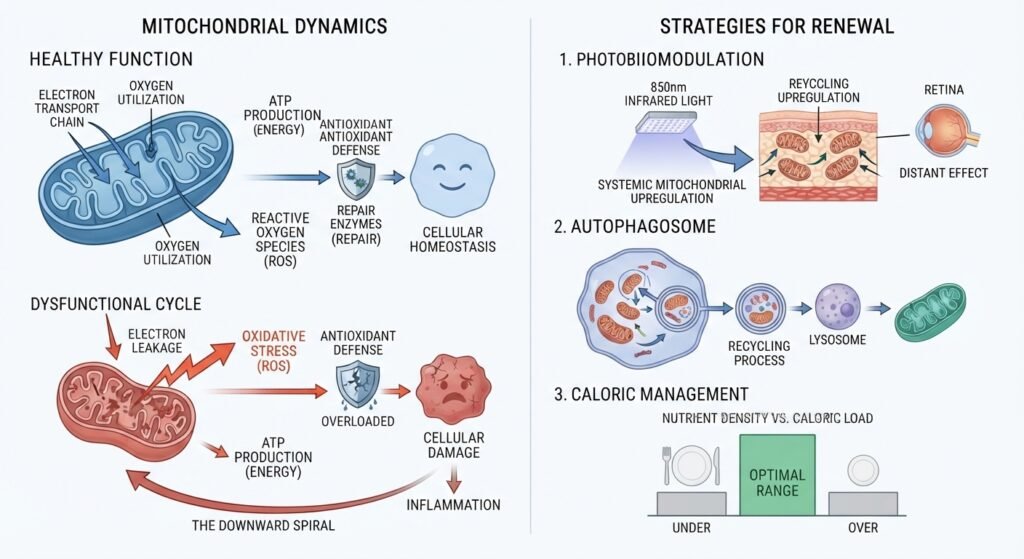
The Strategy for Cellular Rejuvenation
Mitochondrial dysfunction isn’t just a byproduct of age; it is an active feedback loop. When mitochondria fail to produce energy effectively, they release free electrons that create toxic byproducts. These toxins then further damage the mitochondria, causing them to “run hot” and break down. To break this cycle, you must focus on both protection and renewal.
One emerging, high-potential approach is photobiomodulation (using specific infrared light). Research shows that exposing the body to infrared wavelengths can upregulate mitochondrial energy production. Interestingly, this effect is systemic; illuminating one area can trigger an abscopal effect, improving mitochondrial ATP output in distant tissues, such as the retina.
Beyond light, modern science is exploring “cellular housekeeping” through autophagy. This is the body’s recycling center, which degrades damaged cellular components to provide the building blocks for new, healthy cells. While many point to fasting as the primary trigger for autophagy, the science suggests it is a complex, context-dependent process. Simply starving yourself can be counterproductive if it leads to muscle loss or nutritional deficiencies, which are far more dangerous in humans than in the controlled environments of laboratory mice.
Instead of extreme deprivation, focus on maintaining a high-quality diet that provides adequate nutrients while managing your overall caloric load. The goal is to avoid an “over-muscled and over-fat” composition, keeping your internal engine running at an optimal temperature.
Bottom Line: Longevity is not about surviving longer, but about maintaining the structural integrity of your cellular engines so you can remain functional and healthy throughout your entire lifespan.